Note: There are four pages to this piece.
This memoir is dedicated to the music educators who showed me the magic of the performing arts; to my musical peers, who are now some of my closest friends; and to my parents, who supported me from the moment I said I wanted to learn to play the clarinet.
June 2022
The house lights dim in Carnegie Hall’s Isaac Stern Auditorium. Around me, I hear the chatter of 2,700 audience members gradually recede to murmurs and fade to silence. The conductor raises his baton, and I see every musician lock eyes with him, their instruments poised for play. I suck in my breath and don’t dare to breathe. My first-ever Carnegie Hall concert is about to start.
The conductor gives the baton a tiny flick, and Mahler’s First Symphony begins with a delicate high-octave vibrato from the violins. I close my eyes and a woodland scene forms in my mind: a dense forest with sunlight filtering through the trees. Then the woodwinds chime into the symphony, adding chirping birds to my mental image. Lastly, the horns tout their triumphant fanfare, completing the scene with ambling woodland animals.
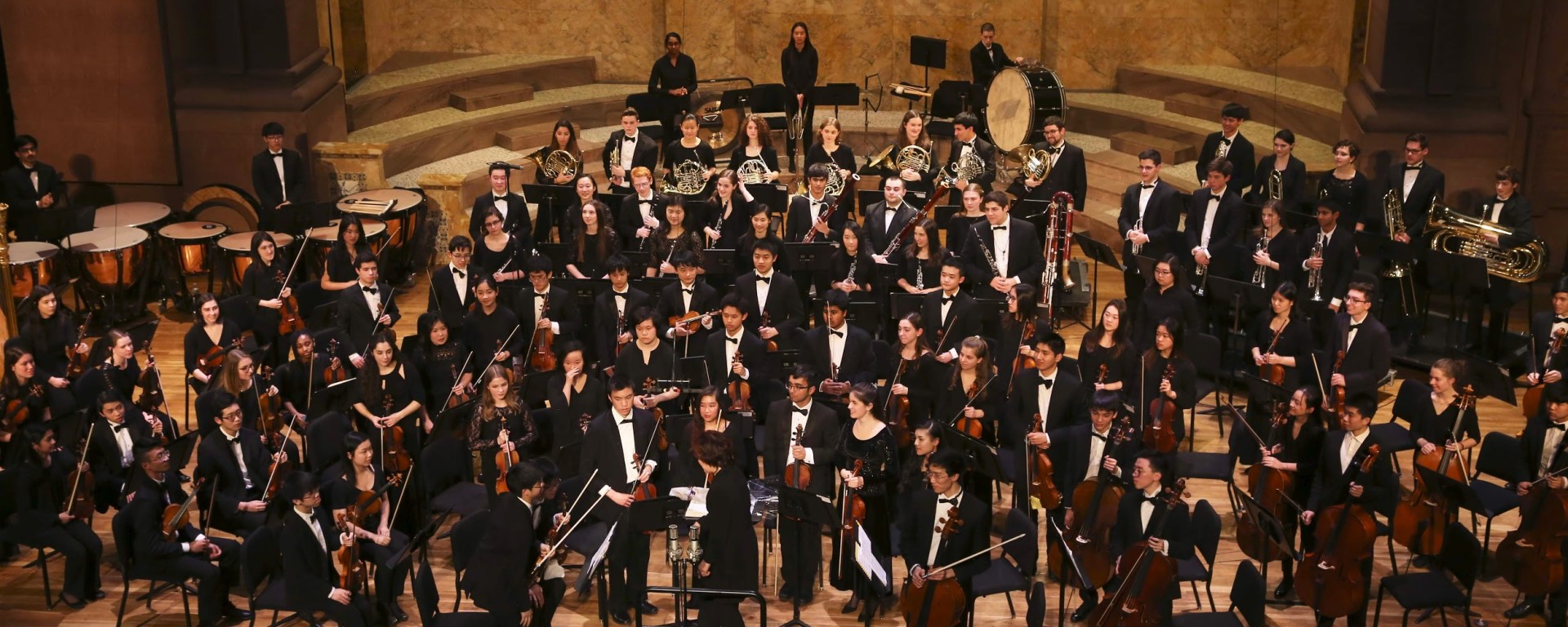
But when I open my eyes, I’m no longer sitting on one of Carnegie Hall’s plush audience chairs. It’s January 2019, and I’m onstage at Princeton’s Richardson Auditorium with 100 other New Jersey Youth Symphony members. I sit shoulder to shoulder in the wind section with my clarinetist friends, instruments of all different sizes surrounding the four of us. As Mahler’s symphony sways with satiric trills and foreboding lulls, we instinctively switch from bass clarinet to B-flat to A to E-flat, putting one clarinet down and picking the other up in one fluid motion. Sometimes, the orchestra gradually gives way to just us, and our warm melodies mix with the adrenaline coursing through our veins.
Richardson Auditorium crackles with electricity as the strings, brass, and percussion rejoin to crescendo to the majestic finale. Our conductor gives her baton one last whirl, and the final note of the symphony lingers in the air.
For a moment, the audience is stunned into silence. Then, without warning, the auditorium erupts in thunderous applause. People rise from their seats, shouting “Bravo!” Some whistle. Others wave concert programs in the air.
Our conductor motions for the entire orchestra to stand, and we do, soaking in the standing ovation. I must have the biggest smile on my face, because all the hours and hours of rehearsing, auditioning, and practicing have led up to this. This must be how it feels to be at the top of the world.
⋅•⋅⊰∘⋆⋅☆⋅⋆∘⊱⋅•⋅
The euphoria of performances, the fun and frustration of rehearsals, the anxiety of auditions, and the friendships that formed from them all — these can all be traced back to one winter afternoon in fourth grade.
My mother was driving me home from school when suddenly, I made an announcement.
“I want to learn clarinet,” I said.
My mother then asked why.
I gave what I thought was a logical response. “It looks cool, I don’t want to learn flute like all my other friends, and Squidward plays it!”
The more honest answer was that most of my friends had joined our school’s optional music program in September. Whenever I saw them toting their instrument cases on their way to after-school band rehearsals, I couldn’t help but feel left out. I wanted to be part of the fun, even if it meant joining three months late. And I thought the clarinet was the next-best instrument after the flute. It was true that I didn’t want to play what all my other friends played, and I consumed lots of Spongebob at the time.
My mom worked her magic and did not question my intentions. Within the month she rented out a clarinet and signed me up for weekly private lessons with my first teacher, Mr. Paul. In the days that preceded my first lesson, I spent hours peering into the clarinet case: five black pieces of wood with silver keys, all nestled in cushioned velvet.
Mr. Paul taught me how to put the pieces together. Start from the bottom with the bell, he said, and assemble your way up. Use cork grease when necessary. I watched with wonder as he aligned the reed along the mouthpiece, his eyes peering intently through his spectacles, his leathery lands handling each part of the instrument with care.
After we practiced assembling the clarinet several times, it was finally time for me to try making a sound. I picked the clarinet up, the entire thing being almost as long as I was tall, put the instrument to my mouth, and blew.
SQUEAK!
If Mr. Paul or my mother, who was sitting beside me, suffered ear damage, they didn’t show it. Instead, Mr. Paul patiently adjusted my mouthpiece and told me not to puff my cheeks lest I wanted to pop a vein. I tried again and again until, towards the end of the lesson, I produced something that sounded less than a squeak and more like a honk.
In the weeks that followed, I practiced putting together and taking apart my clarinet at home, lathering the corks with cherry-scented grease. I aligned my reed to the mouthpiece and practiced making a proper sound, being mindful to not puff my cheeks. At first, I filled the entire house with ear-splitting squeaks, which gradually turned to honks, and eventually turned into more of the warm, round sounds that a clarinet actually makes.
From there, my progress escalated. I already knew how to read sheet music from playing piano, so I quickly translated those skills to clarinet. I swiftly graduated from Hot Cross Buns, from Twinkle Twinkle Little Star, from Ode to Joy.
By mid-May, I was ready for my school’s beginner band. After school, I marched proudly to the band room with my very own instrument case, grateful for my mother who had convinced Mr. Sorensen, the band director, to let me join even though the concert was a week away.
To my surprise, the band room was an overwhelming madhouse: cases were strewn everywhere, some kids were lugging around massive brass instruments I had never seen before, and the entire room was filled with a deafening flurry of random instrument noises. Meekly, I made my way to the clarinet section, the complete opposite side from where all my flute friends sat. I quietly began putting my instrument together: starting with the bell, then assembling my way up. The routine calmed me.
Suddenly I heard Mr. Sorensen tapping a music stand, signaling the start of rehearsal. In his hand was an object shaped like a long toothpick, which had to be a baton! He reminded everyone that the baton’s downward motion signaled the “downbeat,” which meant that that’s when everyone should start playing. He also reminded everyone to wear proper concert attire next week — absolutely no white socks allowed. I tried my best to absorb all this new information.
On Mr. Sorensen’s downbeat, all of us began to play a scale. My ears were filled with the blend of flutes, clarinets, trumpets, french horns, and a bunch of other instruments I couldn’t name. I couldn’t really hear myself playing, but it didn’t matter! The sound that we all created together was so unique and rich. I felt reverberations rattling my bones.
The rest of the rehearsal was a wonderful blur of music-making. I told my mom about it all on the way home: how there were so many cool instruments that came together to produce one beautiful sound, how each instrument would come in at different times in each song, and how, to my relief, I could sightread all the music.
That weekend, my mom and I went to the mall to pick out my concert outfit: a white ruffled shirt and black dress pants. The following Wednesday, I found myself onstage after just two rehearsals, sitting in the first row of my middle school band. As I played and followed along with Mr. Sorensen’s baton, I caught a glimpse of my mother in the third row, hoisting a camcorder, bouncing along to the music. And when we got home that night, we put the recording of my performance on the living room television and played it five times through.
Continue to Page 2, or scroll past the ads for the full page count
 Katie Tan
If I had the chance, I’d go back to share the stage with you and play Mahler 1 with all those amazing musicians in a heartbeat. I miss the memories we created back in NJYS. I loved reading this, thanks for bringing me back!!
LikeLiked by 1 person
ahh thanks so much for reading Ryan!!
LikeLike