⋅•⋅⊰∘⋆⋅☆⋅⋆∘⊱⋅•⋅
Joining the band was the first step to embarking on my musical journey. Now, every year came with new milestones.
In fifth grade, my parents bought me my very own clarinet — a Buffet E11 — and I was promoted to the advanced band where I played amongst towering middle schoolers. (My school taught students between the fourth and eighth grades). In sixth grade, I climbed my way up to be the advanced band’s first-chair clarinet, performing my first solo in the middle school band version of Tchaikovsky’s Waltz of the Flowers. And in seventh grade, I finally ventured beyond the walls of my school’s band room by auditioning for the region band.
Region band auditions, or “regions,” was the ultimate challenge for middle school band students. Hundreds of students from all over central New Jersey audition for only a handful of spots in one of two ensembles: the wind ensemble, which was the higher tier group, or the symphonic band, which was slightly larger in size. Mr. Sorensen had told me in late October that I should give regions a try. So in January, I found myself in the backseat of my mother’s car, pulling up to a nearby school where the auditions were held.
If I had thought the band room was chaotic, then this middle school’s auditorium-turned-warmup-room was the band room times ten. Some students were practicing their scales so fast, they sounded like a yoyo of notes. Others were meticulously polishing every key on their instrument. I also overheard some clarinet players practicing the audition solo with much more zeal and style than I ever had. There was no way I could compete with them, but I had come to this audition with zero expectations after all. There was no need to be nervous.
I exited the auditorium after warming up, grateful for the fresh air, and walked down the hall marked “CLARINETS.” I chose to wait in line behind a couple of students for the scales room first.
The line crept forward. Some waited calmly while others wiped their sweaty palms on their jeans every five seconds. One student pressed his ear to the classroom door, trying to hear the auditioning students. I watched as each student before me entered the classroom and emerged one minute later, their faces either elated, dejected, or blank.
Finally, it was my turn. The student before me exited the classroom, and I shuffled inside.
Mr. Sorensen had told me beforehand these auditions were “blind,” but I was still taken aback when I saw three adults, who would only know me as audition number G-86, with their backs turned toward me. Facing me was a music stand with an index card that read: Please play a G-major scale, an A-flat major scale, and a B-flat scale. I moistened my reed, blew some air through my mouthpiece, and then played each scale steadily with as much confidence as I could, taking a deep breath between each one. Then I quietly left the room for the blind judges to deliberate my scores.
Next up was the solo room, then the sightreading room, and after that my audition was complete. All I could do now was wait until the results came out.
On the car ride home, my strange calmness surrounding this whole ordeal was gradually replaced with anxiety. Were my scales clean enough? Did I rush my solo? Had I followed the dynamics in the sight reading excerpt? There was no chance that I could make regions because everyone else sounded so good, but what if by some fluke I somehow did?
The anticipation became crippling. Minutes felt like hours, and hours felt like days. My new hobby became refreshing the regions auditions webpage every five minutes to see if the results had come out. My chest would swell as the website reloaded, then plummet with disappointment when the refreshed page bore no news.
Saturday crept by. When I woke up Sunday morning, I raced to the webpage and groaned when I saw nothing new. Eventually, I gave up on believing anything would come out that weekend and went back to doing my homework — until that evening, when suddenly I heard my mother hollering from the kitchen.
“THE RESULTS ARE OUT!” she shouted.
I felt my soul leave my body. I flew downstairs and yanked the iPad my mom was holding from her hands. Sure enough, there was a new link on the webpage that read “VIEW RESULTS.” My fingers trembling, I clicked and scrolled breathlessly to the bottom of the clarinet section. If I had been accepted, then surely my audition number would be towards the end.
But I didn’t see my number. Confused, I kept scrolling up, and up and up, until —
“KATIE GOT FIFTH CHAIR IN SYMPHONIC BAND!” It was my mother, screaming in my ear. “Fifth chair!!!” she snatched the iPad back and started dancing around the kitchen, waving the tablet in the air.
My ears rang and my head spun. I had seen it too — G-86 was written next to the letters SB-5. But could it really be true?
It was. The next day at band rehearsal, Mr. Sorensen greeted me with a beaming smile and handed me a crisp folder that had come in the mail that morning. It was labeled “KATIE TAN: SB-5,” and tucked in it were all the pieces I was to learn for rehearsal that began that weekend. Each one was neatly separated by a paper clip.
Appalachian Morning. Flight of the Thunderbird. Into the Storm. Each day after school, I practiced each piece and listened to their YouTube recordings multiple times. These were vastly more difficult than the band pieces I was used to, with unforgiving key signatures and speedy runs. But the challenges just made me more excited for the first rehearsal on Saturday.
I had every right to be, because the next two weekends were the most marvelous weekends in all my twelve years of living. The 16 total hours of region band rehearsals were no ordinary middle school band rehearsals. I was surrounded by some of the best music students from central New Jersey. On our first read-through of each piece, no one seemed to miss a single note. I thought we already sounded ready for the concert!
But our conductor, Mr. Paterno, guided us towards sounding our best. He earnestly brandished his baton in the air like a magic wand, emphasizing the importance of cohesivity and detail. Everyone must land the downbeat at the exact same time for entrances to sound crisp and clean. Exits are just as important as entrances. And if the dynamic marking says piano, then EVERYONE must play softly; even just one person playing mezzo forte would ruin the effect.
With every passing hour, our articulations became sharper, our dynamics clearer, our blend smoother. And during it all, Mr. Paterno loved to laugh his jolly laugh, which made me think he was a real-life Santa Claus. He also loved to spout wisdom but somehow always managed to turn it into a corny joke. (“If you give a person a fish, you’ve fed them for a day; if you teach a person to fish, you’ve fed them for a lifetime; if you slap them with a fish, they’ll get very angry.”)
Concert day could only be described as magical. Together, we brought to life the serenity of Appalachian Morning, the furious intensity of Into the Storm, and the grandeur of Flight of the Thunderbird. Mr. Paterno’s words echoed in my head throughout our performance: the music lies dead on the page for most of its life; it only comes alive when we play it. Everyone else seemed to remember this as well because every note we played sounded like liquid gold.
How bittersweet it was for us to grow and create beautiful music together, only for us to each go our separate ways after two short weeks! But no matter. Each subsequent year provided a fresh opportunity for students old and new to reconvene, albeit with a new guest conductor for each ensemble every time. And every year I braved the audition process (high school auditions proved to be much more nerve-wracking than middle school ones) to participate. Eventually, I began to recognize recurring faces, and we all formed a group during rehearsal break times. Someone would produce a box of Uno or poker cards, and the hallways would echo with our screams of “UNO!!!!!” or “I slapped the pile first!” We commemorated concert days with goofy group photos and passionate Instagram posts. And although we saw each other only two weeks out of each year, our group chat stayed perennially active, with some clarinetists in the group sharing technique tips and others sending entertaining memes.
I had come so far since playing Hot Cross Buns! And now I had a wonderful group of musical friends to grow alongside with. My practice sessions no longer consisted of unbearable squeaking; they were now filled with hours of long tones, scales, drills, solos, and ensemble excerpts. Audition pieces had turned from one-page minuets to three-movement sonatas. I’d grown out of my white ruffle shirt and pants, preferring instead to wear flowing black gowns. Region band auditions eventually evolved into ones for All-State. And I finally decided it was time to switch instructors from Mr. Paul to Mr. Rudderow, who catapulted my confidence and inspired me to attain the unthinkable: a spot in the New Jersey Youth Symphony in my sophomore year.
NJYS was similar to the region and All-State bands in that students from all over New Jersey auditioned for it. But instead of having only two weekends reserved for massive amounts of rehearsal and a concert at the end, NJYS rehearsals were weekly, with three concerts spread throughout the year. It was also a private organization and even had its own building dedicated to rehearsals and private lessons.
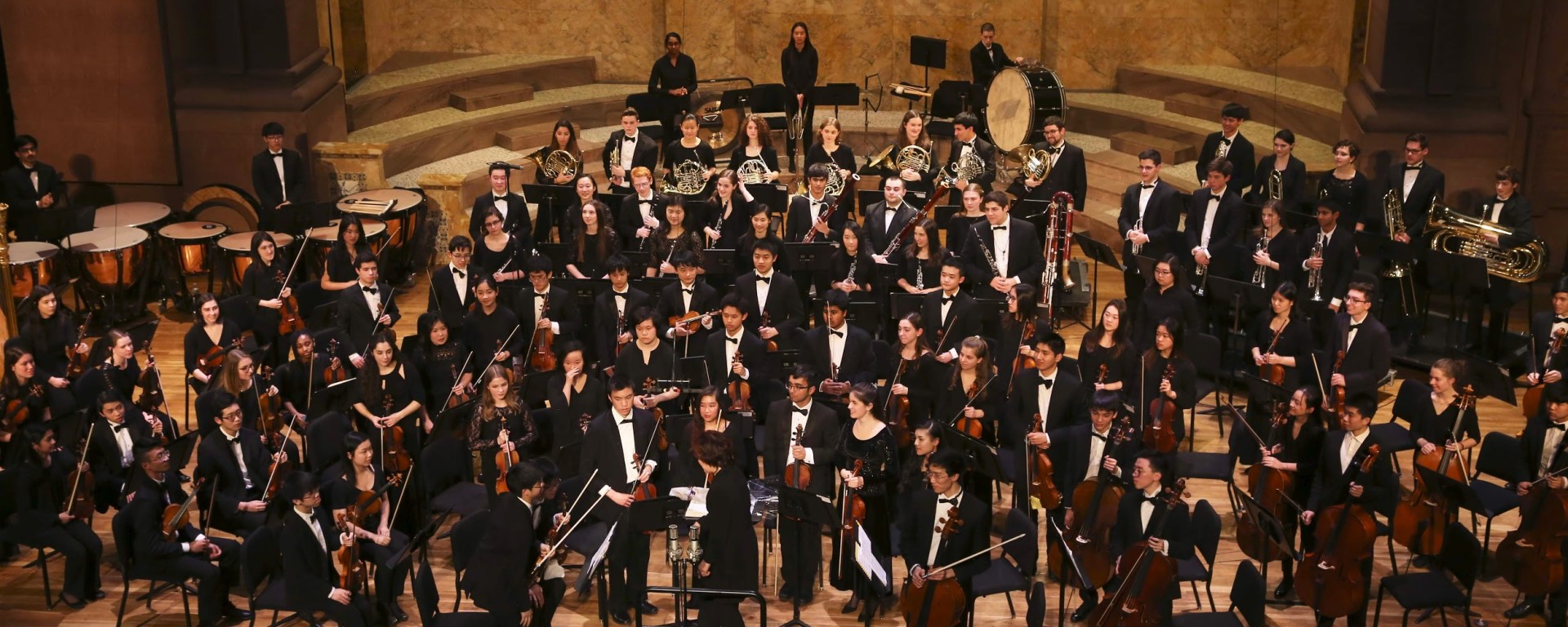
My first rehearsal was unlike anything I’d experienced in a band. Rows of violinists, violists, cellists, and bassists sat at the front of the orchestra, while a much fewer number of winds, brass, and percussion populated the back. Our small wind section allowed each player’s unique sound to add different textures to the entire ensemble. There were only four clarinetists including myself, and I found out very quickly just how exposed each of our individual parts were during our first read-through of Shostakovich’s Tenth Symphony. It fascinated me how four players section could sound so powerful. We filled the rehearsal hall with sonorous melodies that were delicate, stately, jeering, or with whatever attitude fit the score best.
I also had no idea that orchestral parts called for switching to different clarinets in the middle of movements. The Shostakovich called for switching between B flat to A-clarinet, and I didn’t even know what an A-clarinet was!
It was no coincidence that so many wind and brass musicians I’d met regions and All-State also participated in NJYS. Seeing each other weekly for three hours only strengthened our bond, and we made friends with string players too. There wasn’t enough time to play Uno during break times, but there was still plenty to raid the vending machine, try out each others’ instruments, and play whacky duets.
As the weeks, months, and years passed by, so too did the countless hours of practicing and the time spent in the car to and from rehearsals. I accumulated a considerable amount of repertoire from regions, All-State, NJYS, and of course my high school wind ensemble, which I all kept track of on Spotify. Various conductors came and went, some of who were very animated, others who were slightly more dull. And habits I developed when I was in middle school had become muscle memory, such as fishing out a pencil from the bottom of my case, keeping my eyes glued on the conductor, exasperatingly switching out my reeds mid-rehearsal.
But the exhilaration of performing with my friends under glowing stage lights, playing clarinet with all my heart to a full audience — an audience mostly of parents, but a full one nonetheless — never got old.
 Katie Tan
If I had the chance, I’d go back to share the stage with you and play Mahler 1 with all those amazing musicians in a heartbeat. I miss the memories we created back in NJYS. I loved reading this, thanks for bringing me back!!
LikeLiked by 1 person
ahh thanks so much for reading Ryan!!
LikeLike